



You see a beautiful dress in a shop and buy it without much thought. But have you ever
considered what happens to it when you grow tired of it or when it no longer fits? Textile waste
is piling up in enormous quantities, and solutions for managing it are only now being actively
developed.
NGO Creative Estonia, in collaboration with the Estonian Academy of Arts and partners from
eight EU countries, is participating in the EU-funded project SiT – Sustainability in TCLF. The
project aims to strengthen sustainability in the textile, clothing, leather and footwear (TCLF)
sectors. As part of this initiative, two micro-credential programmes have been developed: Textile
Recycling Manager and Bio-Textile Technician.
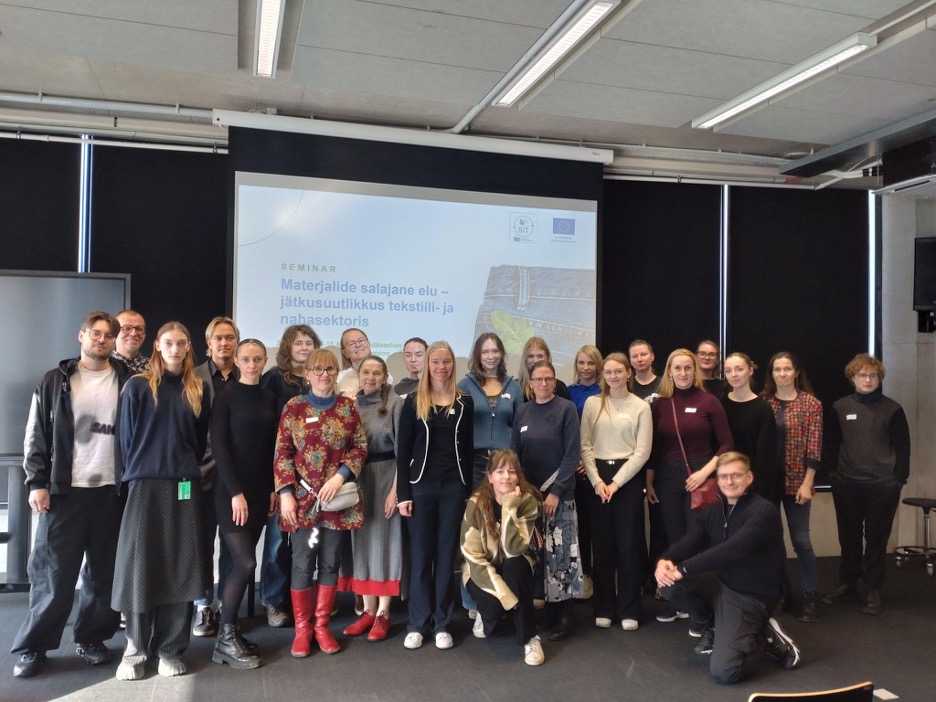
On March 25th, a conference was held at the Estonian Academy of Arts (EKA) to share
practical experiences in circular economy approaches within the textile and leather sectors, and
to raise awareness among participants of the SiT e-learning programme about the Estonian
textile ecosystem. The event brought together EKA students, graduates of the SiT platform,
entrepreneurs from the textile field, and other interested participants.
There are several pathways to making the sector more environmentally sustainable: reducing
consumption, developing environmentally friendly and biodegradable materials and using them
responsibly in industry, improving waste sorting and collection, and increasing recycling and
reuse. A crucial first step is raising consumer awareness.
What is already being done in Estonia?
Entrepreneurs working on circular solutions in the textile and leather sectors, as well as
innovators developing new sustainable materials, shared their inspiring experiences.
Material technologists, in collaboration with designers, are striving to create more
environmentally friendly materials. RAIKU, which has already gained international recognition,
introduced an innovative wood-based packaging material that can replace plastic. Myceen has
developed a material made from mycelium that can be used in both design and construction.
KIUD has created an innovative and sustainable packaging material using textile waste.
In addition, several service providers in Estonia are actively contributing to circularity in the
textile sector. VÄGI is an experimental circular economy ecosystem focused on valorising textile
waste through three main directions: a textile taxi service that collects textile waste from
individuals; a valorisation centre where materials are processed, and workshops are held; and
the Vägi experimental studio, where material transformation takes place.
Alongside local examples, international experience was also presented. Rosa Mosa shared
insights into the development of environmentally friendly footwear in international markets,
including Austria and Japan.
Estonian fashion designers are increasingly concerned about the environmental footprint of their
field and have taken significant steps to make the sector more sustainable. Several inspiring
initiatives were highlighted. Fashion Revolution supports the development of an ethical and
sustainable fashion industry. The Estonian Fashion Festival aims to promote Estonian fashion,
support designers’ growth, and raise awareness of responsible and sustainable fashion. Samm
Korraga is a movement promoting conscious fashion consumption, with a mission to increase
awareness among young consumers about how to make environmentally responsible choices
when purchasing textile products.
The next seminar day focusing on the sustainable development of the TCLF sector will take
place on 2 April. Kerli Kant Hvass, PhD, will deliver an online lecture titled “Opportunities and
Challenges in Building Circular Textile Systems.”
Kerli Kant Hvass holds an industrial PhD in circular business model innovation and has over 15
years of experience advancing circularity in the fashion and textile sectors, both in practice and
academia. As the founderof Revaluate and Assistant Professor in Circular Economy at Aalborg
University, she combines an entrepreneurial mindset with academic expertise to foster
collaboration and develop circular textile systems across the Nordic-Baltic region and beyond.
Originally from Estonia and with a career spanning Denmark and Estonia, she has long
promoted Nordic-Baltic textile cooperation through various projects supported by the Nordic
Council of Ministers.